When the elegant charm of the East meets the Western campus, a cross-border cultural dialogue quietly warms up and kicks off. Ms. Qingqing, Cultural Ambassador of Chinese Geographical Indication Culture, was invited to John P. Stevens High School in the United States. At the school’s annual International Cultural Festival, she took culture as a link to build a bridge for communication and successfully sparked an upsurge of exchanges and interactions centered on Chinese geographical indication culture.
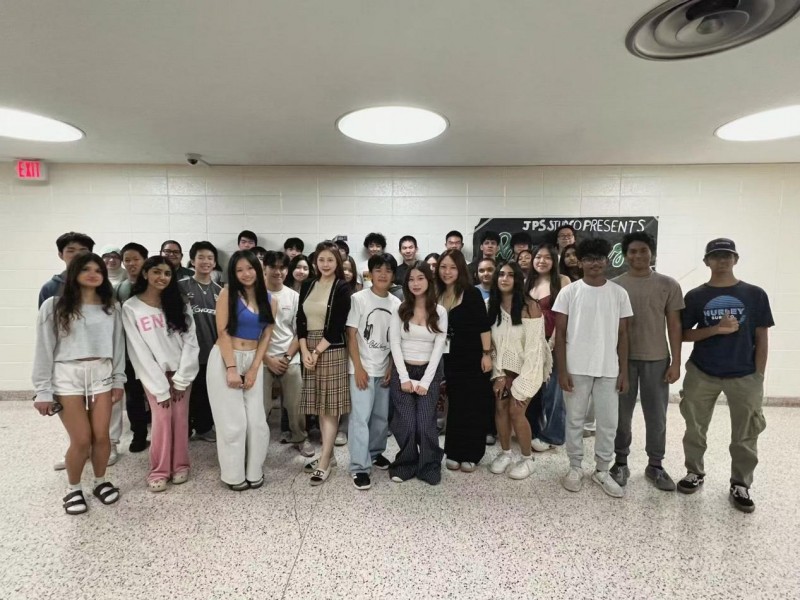
Ms. Qingqing’s visit quickly ignited the vitality of the campus. Students flocked around her, creating a warm and lively atmosphere for interaction. Asian students felt a special sense of affinity and took the initiative to sit around and talk, expanding the conversation from hometown memories to the splendor of Chinese geographical indications. Their words were filled with nostalgia and pride for their native culture. Students from other regions also joined in one after another, eagerly exploring the stories behind Chinese geographical indications. Cultural enthusiasts from both countries engaged in in-depth discussions on geographical indication culture, with sparks of thought continuously colliding during the interactions. In the segment on Dunhuang murals—a Chinese geographical indication and a world-class cultural treasure—Ms. Qingqing vividly recounted the thousand-year-old heritage of the desert grottoes and the unique charm of Eastern aesthetics, allowing the students present to immerse themselves in the romance of “Apsaras soaring to embrace the moon” and the profound richness of “colorful sculptures shimmering with light.” As an important part of Dunhuang culture, Dunhuang murals carry profound historical and cultural connotations. They symbolize the diversity, unity, openness, and inclusiveness of Chinese culture, boast extremely high historical, cultural, and artistic value, and occupy a pivotal position in the global cultural arena.
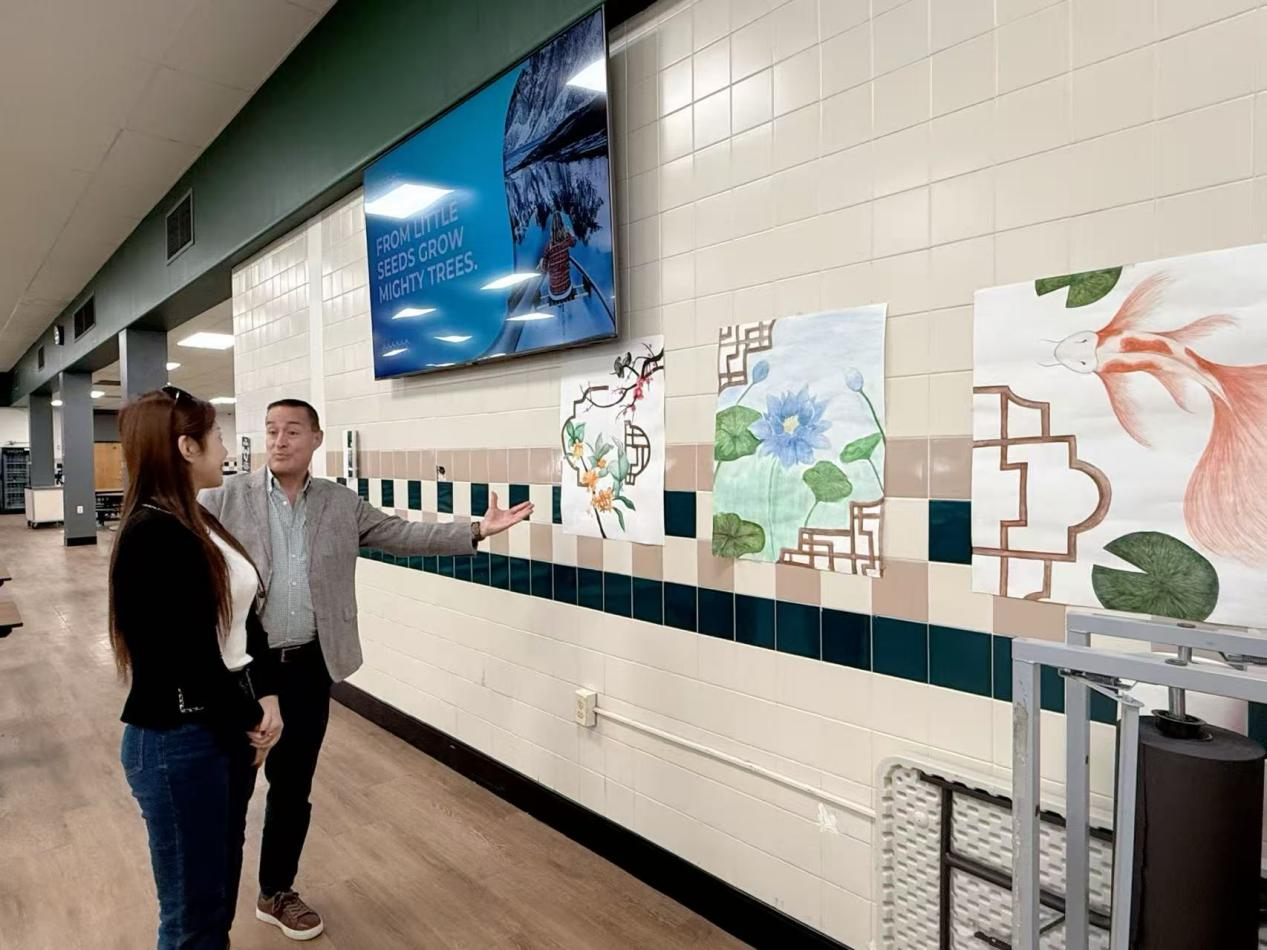
When talking about outstanding Chinese culture, Vice-Principal Robinson specifically mentioned: “The artworks created by the Chinese Student Association displayed on the café walls are truly outstanding. We can achieve the co‑transmission of cultures through cooperation. Just as the Chinese Student Association has done, we can make projects more attractive to students from diverse cultural backgrounds. Maintaining an inclusive and open mindset is crucial, and this is also the core competency we aim to impart to our students.”
When interviewed, Vice-Principal Robinson expressed great pride in the campus cultural atmosphere: “Our school enjoys a favorable environment, providing students with an excellent platform to unite, coexist, and embrace differences. Student-created artworks are visible everywhere on campus—the homecoming promotional banner, themed on The Great Gatsby, even won the ‘Best American Literary Work’ Award. As you walk further into the campus, the school song engraved on the walls is a distinctive symbol of John P. Stevens High School, just like our educational philosophy: ‘BE THE CHANGE.’ We are committed to integrating education into every detail. For example, we incorporate the theme of Autism Awareness Month into our football games, and in the cafeteria, which can accommodate 600 students, we also offer a variety of ethnic food options for the children.”
Subsequently, Vice-Principal Robinson showed Ms. Qingqing around the students’ creative paintings, which possess both timeless charm and diverse perspectives. He introduced: “Qingqing, your passion for painting and your upcoming solo exhibition are truly admirable. On our campus, artworks are everywhere, but the most eye-catching one is this multi‑dimensional Starry Night—created by students several years ago, it integrates rich elements and is the most touching artistic work at John P. Stevens High School. I have walked down this corridor countless times, yet today is the first time I can stop to appreciate this masterpiece together with everyone.” At John P. Stevens High School, I saw not only Van Gogh’s starry sky but also creative Chinese paintings of lotus flowers, birds, and flowers. Western brushwork and Eastern artistic conception complement each other beautifully in this high school, which is exactly in line with the original aspiration of the cultural festival—“exchanges and mutual learning among civilizations”—allowing different civilizations to nourish each other through collision.
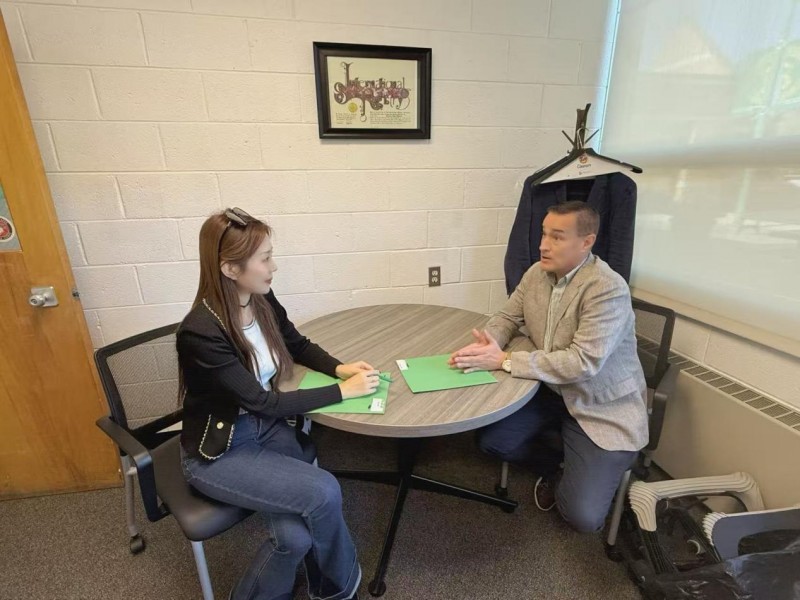
Right: Vice-Principal Robinson, John P. Stevens High School
As the exchange drew to a close, Vice-Principal Robinson extended his sincere gratitude to Ms. Qingqing for her visit: “Your presence has brought an unforgettable time to the campus. The children were full of enthusiasm and kept asking questions. At John P. Stevens High School, while we attach great importance to the imparting of cultural knowledge, inviting individuals with specific cultural backgrounds to the campus can bring more impactful experiential value to students. It means a great deal to us that you took time out of your busy schedule to participate in the cultural festival. I live in the suburbs of New York, a city with a fast pace and a busy daily routine, so I fully understand that you also came here specially amid your busy work. On behalf of the school and all the students, I sincerely thank you for taking the time to interact with the children; this is of great significance to me as an educator. The school’s door is always open to you, and we welcome you to visit and exchange ideas often. High school is a period of trial and error for students’ growth—they are not yet fully mature. When they turn 18 and enter society, they will have to face real challenges head-on.”
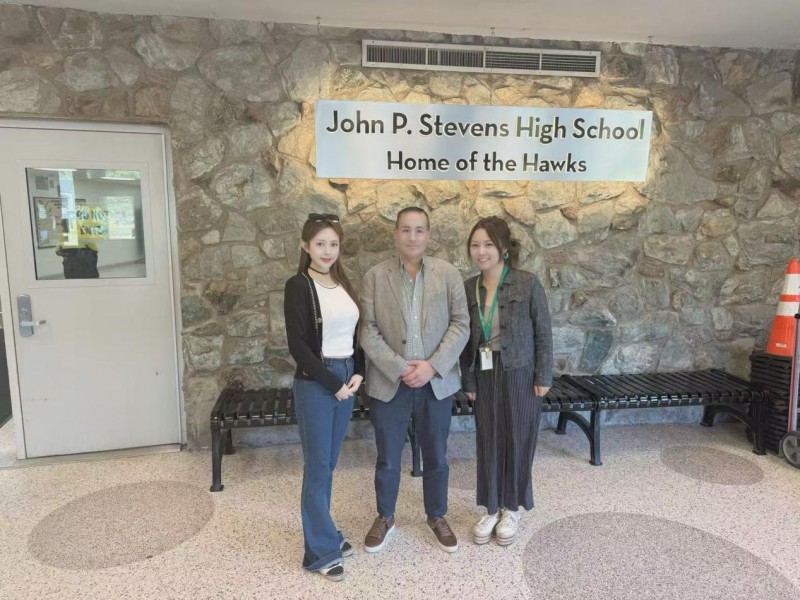
Right:Xi Chen, Advisor of the Chinese Language and Culture Club
This cross-border cultural gathering is not only a splendid cultural feast, but also allows Chinese geographical indication culture to take root in overseas campuses through Ms. Qingqing’s sincere sharing. This exchange practice has demonstrated to the world the inclusiveness and mutual appreciation of Eastern and Western civilizations. With the innovative and inclusive attitude of “going global and bringing in,” it confirms the profound connotation that “culture knows no borders, and love connects all.” This dialogue across mountains and seas is precisely the most touching form of mutual learning among civilizations.(The image is annotated by Qingqing)(Content compilation and image provision by Keefer Kohli )